
A Serbian bank account is often the practical step that turns a relocation or business plan into an operating reality. It allows you to receive local payments, pay rent and utilities, manage payroll, settle taxes, and reduce the friction of relying on foreign cards for daily expenses. But how foreigners open bank accounts in Serbia depends on their purpose, legal status, source of funds, and the bank’s own compliance assessment.
For foreign entrepreneurs and internationally mobile professionals, the main challenge is rarely filling out the application form. It is preparing the right documents and presenting a clear, consistent explanation of why the account is needed. Serbian banks are required to conduct customer due diligence, particularly when an applicant is nonresident, owns a foreign company, or expects international transactions.
Start by choosing the right account
The first decision is whether you need a personal account, a business account, or both. These serve different purposes and should not be treated as interchangeable.
A personal account is suitable for salary payments, rent, household expenses, card payments, and personal savings. Foreign nationals commonly open accounts in Serbian dinars (RSD) for local payments and may also request foreign currency accounts, often in euros or U.S. dollars. The currencies available and the conditions for incoming transfers vary by bank.
A business account is required when a Serbian company or sole proprietorship needs to receive revenue, pay suppliers, pay taxes, or manage employee costs. A locally registered legal entity generally needs a Serbian business account to operate effectively. Banks will review both the company documentation and the identity and ownership structure of the people behind the company.
If you are moving to Serbia while continuing to work for an overseas employer, the right structure depends on your tax residence, employment arrangement, and payment flow. Opening a personal account may be straightforward for everyday life, but it does not replace advice on how income should be received and reported. The banking setup should support, rather than complicate, your immigration and tax position.
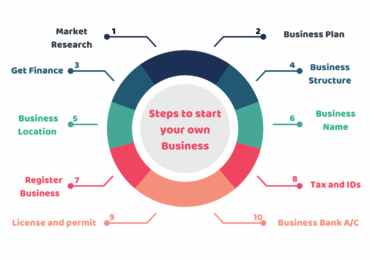
How foreigners open bank accounts: the usual process
Most banks require an in-person visit for the initial opening, especially for nonresidents and corporate accounts. Some institutions may begin document review remotely or allow appointments to be arranged in advance, but identity verification and original signatures are commonly handled at a branch.
The process usually begins with selecting a bank and confirming its requirements for your profile. Requirements can differ significantly between banks, and they may change based on the applicant’s nationality, residence status, intended transactions, and business sector. It is worth confirming the document list before translating, certifying, or traveling with paperwork.
At the appointment, the bank will verify your identity, collect supporting documents, ask about the purpose of the account, and request information about expected transactions. You may be asked where funds will come from, which countries you expect to receive payments from, the expected volume of transfers, and whether you are acting for yourself or a company.
Once approved, you will sign the account-opening documentation and receive account details. Debit cards, mobile banking access, and online banking credentials may be issued immediately or collected later, depending on the bank’s procedure. For business accounts, payment authorization rules must also be set up for directors, representatives, or other approved users.
Approval is not automatic. A complete application can still require additional review if the bank needs more information about your business activity, source of funds, or international payment relationships. A clear file and realistic transaction explanation can prevent avoidable delays.
Documents banks commonly request
Exact requirements vary, but a foreign individual should expect to provide a valid passport and evidence of an address. Depending on the account type, the bank may also request proof of legal stay in Serbia, such as a visa, temporary residence approval, or other immigration documentation.
For a nonresident account, banks often request additional evidence showing the legitimate reason for opening an account in Serbia. This may include an employment contract, lease agreement, proof of property ownership, company registration documents, a business plan, or documentation connected to an investment or planned relocation.
For a Serbian company, the documentation normally includes the company registration extract, tax and registration details, founding documents where relevant, and identification for the legal representative and beneficial owners. If a foreign company owns the Serbian entity, the bank may require corporate extracts, ownership charts, and documents for the foreign parent company. These documents may need certified translations into Serbian and, in some cases, legalization or apostille certification.
Banks may also request proof of source of funds. This is not an accusation or an unusual obstacle. It is part of standard anti-money laundering compliance. Helpful evidence can include bank statements, employment income records, invoices, contracts, sale agreements, tax returns, or audited financial statements for a business. The right document depends on the nature of the funds.
Keep the information consistent
Names, addresses, ownership percentages, and business descriptions should match across your passport, company documents, immigration paperwork, and banking forms. Small discrepancies, such as an abbreviated company name or an outdated address, can trigger follow-up questions.
It is also wise to describe your planned activity in plain terms. Instead of stating that a company provides “consulting,” explain the service, typical clients, countries involved, and expected payment pattern. Banks need to understand the economic purpose of the account, not just the legal label of the business.
Resident and nonresident accounts are not the same
Foreign nationals can be treated as residents or nonresidents for banking purposes, but this classification does not always mirror citizenship. Your legal residence, length and purpose of stay, and supporting documents can affect the type of account available and the way certain transactions are handled.
A person who has moved to Serbia and obtained temporary residence may have a different banking path from someone visiting Serbia while managing an overseas business. Likewise, a foreign owner of a Serbian company may be able to open a corporate account even if they do not yet have personal residence status, subject to the bank’s review.
The distinction matters for international transfers and foreign exchange transactions. Serbia has rules governing payments between residents and nonresidents, and banks may ask for the underlying contract, invoice, or other basis for a payment. This is particularly common for loans, dividends, service payments, capital contributions, and transfers involving related companies.
Plan for compliance after the account is open
Opening the account is only the first compliance step. Banks monitor transaction activity and can request supporting documents later, especially for larger or unexpected international payments. If the activity on the account differs materially from what was described during onboarding, the bank may pause a transaction until it receives clarification.
For example, a personal account opened for living expenses should not be used to receive frequent commercial payments from clients. A company account set up for software services may attract questions if it suddenly receives property-sale proceeds or high-value transfers from unrelated jurisdictions. The issue is not necessarily that the payment is prohibited. The bank needs a documented explanation before processing it.
Keep contracts, invoices, payroll records, proof of tax payments, and correspondence related to material transfers. For business owners, coordination between the bank, accountant, and legal adviser is especially useful. A payment can be commercially valid while still requiring the correct supporting documents and payment instructions.
Common delays and how to avoid them
The most common delay is arriving at the bank with incomplete documents. This often happens when applicants assume a passport and company registration certificate are enough. For a foreign-owned company, the bank may need to understand the full ownership chain, not only the Serbian entity.
A second issue is insufficient proof of source of funds. If you plan to transfer savings, investment capital, or proceeds from a foreign business, prepare evidence before initiating the transfer. Waiting until funds are already in transit can create stress and delay access to the money.
Finally, do not select a bank based only on account fees or branch location. Consider the bank’s experience with foreign clients, English-language support, online banking capabilities, card availability, expected transaction currencies, and approach to international payments. The lowest monthly fee may not be the best choice if the bank’s process does not fit your operating needs.
Questions foreign clients often ask
Can I open a Serbian bank account without a residence permit?
Sometimes, yes. Nonresidents may be able to open accounts, but the available options and requested documentation depend on the bank and the reason for opening the account. A residence permit can make the process simpler for a person relocating to Serbia, but it is not the only factor banks consider.
Can I open an account for my Serbian company before I move?
In many cases, a company account can be opened after the Serbian entity is registered and the required representatives and owners complete the bank’s process. Whether you need to be physically present, and which documents must be legalized or translated, depends on the bank and company structure.
How long does account opening take?
A simple personal account may be opened quickly once the bank accepts the documentation. Corporate accounts and applications involving foreign ownership, multiple beneficial owners, or international payment activity can take longer because of additional compliance review.
A bank account should be planned alongside your company registration, residence application, tax obligations, and payment model. When those elements are coordinated from the beginning, opening an account becomes a practical administrative step rather than a last-minute obstacle. Start Serbia can coordinate the documentation and local process so your banking setup supports the way you intend to live and operate in Serbia.