
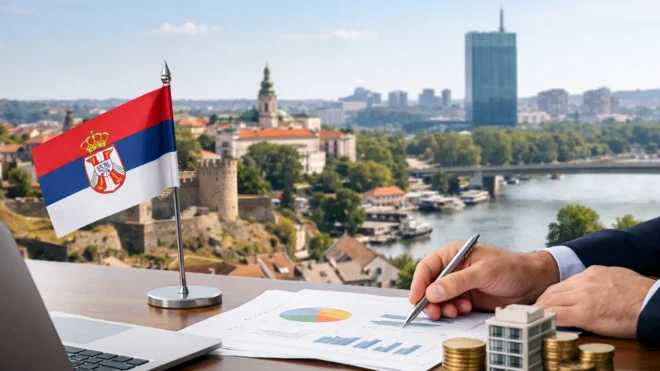
A growing number of foreign founders are asking the same question: why invest in Serbia when there are larger and more familiar markets nearby? The short answer is that Serbia offers a rare mix of low operating costs, skilled talent, strategic location, and practical access to both regional and international markets. For investors who want efficiency as much as opportunity, that combination matters.
Serbia is not a one-size-fits-all destination, and that is worth stating early. It is often a strong fit for companies that value cost control, flexible market entry, and hands-on local support. It may be less attractive for businesses that need a very large domestic consumer base from day one or those unwilling to navigate local administrative procedures. The real advantage comes when the business model matches the market.
Why invest in Serbia for business growth
For foreign entrepreneurs and investors, Serbia stands out because it can support both lean market entry and long-term expansion. You can establish a company, hire talent, lease office space, and manage operational overhead at costs that are generally lower than in many Western European markets. That changes the risk profile of expansion.
Instead of committing a large budget just to test a new region, many businesses use Serbia as a practical starting point. Service companies, IT firms, manufacturing operations, trading businesses, and regional support centers often find that Serbia allows them to become operational quickly without carrying the same cost burden they would face elsewhere.
The country also benefits from a business culture that is increasingly international. In major cities, especially Belgrade and Novi Sad, foreign founders will find experienced professionals, multilingual staff, and a growing base of businesses used to working with international clients and structures.
Competitive costs without sacrificing capability
One of the clearest reasons to invest is cost efficiency. Office leases, salaries, utilities, and many day-to-day business expenses remain more affordable than in a large part of the EU. That does not automatically mean every sector is cheap, but it does mean that companies can often build a functioning operation with less upfront pressure.
This matters most when you are comparing the full operating picture, not just one line item. A lower payroll cost is helpful, but the bigger advantage is that lower overhead can give you more room to hire earlier, extend your runway, or price your services more competitively.
There is a trade-off, though. Lower cost should never be the only investment thesis. The real question is whether you can access the right skills, suppliers, and regulatory support at those costs. In Serbia, many businesses can.
Skilled talent in IT, engineering, and operations
Serbia has built a strong reputation for technical and professional talent. The country is well known for software development, engineering, product support, back-office operations, and business services. Universities continue to produce qualified graduates, and many professionals have experience working with international companies, remote teams, and foreign clients.
For investors building a team, this creates practical options. Some open a local company and hire directly. Others start with a small operational footprint and expand once they validate the market. In both cases, Serbia can provide access to capable talent without the salary levels found in more saturated markets.
That said, the strongest candidates in tech and specialized fields are still competitive to hire. The best professionals often have options with local and foreign employers. If you want to attract and retain them, your offer needs to be organized, compliant, and professionally managed.
Strategic location and market access
Another strong answer to why invest in Serbia is geography. Serbia sits at an important intersection between Central and Southeast Europe, making it a practical base for companies that serve multiple nearby markets. For logistics, trade, regional management, and client service, location can translate into real operational efficiency.
Serbia also maintains trade relationships that make it attractive for certain international business models. Depending on your sector, this can support manufacturing, distribution, and export-oriented activity. Investors looking at Serbia are often not focused only on the domestic market. They are assessing Serbia as a platform.
This distinction is important. If your plan depends entirely on local consumer demand, you should assess that market carefully by sector. If your plan is broader – regional coverage, cross-border service delivery, or export – Serbia may become much more compelling.
A business environment that supports market entry
Foreign investors are often less concerned with whether a market has potential and more concerned with how difficult it is to enter legally and correctly. Serbia can be efficient, but only when the setup process is handled properly.
Company formation, banking, tax registration, bookkeeping, residence status, work permits, and office or residential leasing all need to align. This is where many foreign founders lose time. The opportunity is real, but administrative missteps can create delays, compliance issues, or banking complications.
When these steps are coordinated from the start, Serbia becomes much easier to work with. This is one reason investors often choose a local partner rather than trying to manage legal, accounting, and operational tasks through separate providers. For foreigners especially, execution matters as much as strategy.
Government incentives and sector potential
Depending on the type of investment, Serbia may offer incentives that improve the business case. These can be relevant in manufacturing, job creation projects, and certain strategic sectors. Availability and suitability depend on the size, location, and structure of the investment, so assumptions should always be tested case by case.
Beyond incentives, Serbia has several sectors that continue to attract attention. IT and digital services remain strong. Real estate has drawn interest, particularly in urban areas and commercial use cases. Manufacturing, agriculture, logistics, and shared service operations also continue to be evaluated by foreign businesses.
The right sector choice depends on your timeline and risk tolerance. Some areas offer faster market entry and lower setup complexity. Others may offer larger upside but require more capital, more licensing work, or a longer path to returns.
Real estate and infrastructure advantages
For many investors, real estate is part of the equation whether they are buying, leasing, or simply comparing operational costs. Serbia offers relatively affordable office and residential options compared with many European capitals, especially when viewed through the lens of total setup cost.
Belgrade remains the main business hub, with access to corporate services, transport connections, and a broad talent pool. Novi Sad is also highly attractive, particularly for technology and service-oriented businesses. Other cities may suit manufacturing or logistics better, depending on labor availability and site requirements.
Infrastructure has improved, but location selection still deserves careful review. The best city for a sales office is not always the best location for warehousing or production. Investors should evaluate transport links, labor access, local municipality practices, and utility readiness before committing.
Why invest in Serbia as a foreign entrepreneur
For foreign entrepreneurs, Serbia offers more than cost advantages. It offers flexibility. You can test a market, relocate part of your operations, establish a trading company, set up a service business, or create a base for longer-term residence and regional expansion.
That flexibility is especially useful for internationally mobile founders who want both business structure and personal mobility. In many cases, company setup connects directly with practical issues such as residence permits, work authorization, banking access, and finding suitable housing or office space. These are not separate decisions. They affect each other.
This is where a coordinated setup approach saves time. A foreign founder may be able to register a company, but if the tax setup is incomplete, the bank account is delayed, or residence documentation is not aligned with the business activity, momentum is lost. Start Serbia was built around solving exactly this kind of problem for foreign clients entering the Serbian market.
The trade-offs investors should consider
Serbia has clear advantages, but investors should approach it realistically. Administration can be manageable, yet it still requires accuracy and local understanding. Banking procedures may take time, especially for foreign shareholders or more complex ownership structures. Regulatory interpretation can vary depending on the activity and authority involved.
Market size is another factor. Serbia works well as a cost-efficient operating base, but some businesses will still need a broader regional strategy to reach their revenue goals. In other words, Serbia can be an excellent platform even when it is not the final market story.
The strongest investment decisions usually come from matching Serbia to the right objective. If you want a lower-cost base with quality talent, regional access, and room to scale, the case is strong. If you expect a completely frictionless process with no local guidance, the experience may feel harder than it needs to.
Serbia rewards investors who plan carefully, structure correctly, and move with local support. If that aligns with how you do business, it is a market worth taking seriously.