
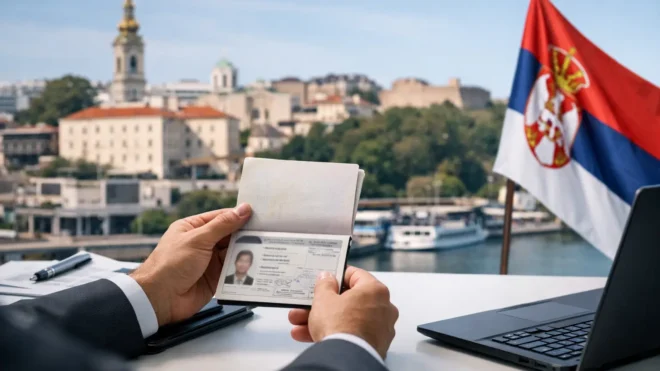
If you are trying to figure out how to get Serbia work permit approval without losing weeks to unclear paperwork, the first thing to know is that Serbia has changed its framework in recent years. That is good news for foreign professionals and business owners, but it also means the process needs to be handled carefully. Small mistakes in registration, employer data, or supporting documents can delay both your right to work and your right to stay.
For most foreign nationals, the work permit process is closely tied to residence status, the purpose of stay, and the legal basis for employment or engagement in Serbia. In practice, that means your route depends on whether you are being hired by a Serbian company, opening your own company, working as a director, or entering Serbia as an intra-company transferee or other specialized category. The right strategy starts before the application is filed.
How to get Serbia work permit approval
The practical answer to how to get Serbia work permit approval is that you usually need three things aligned at the same time: a valid immigration basis, properly prepared supporting documents, and a clear legal relationship with the Serbian entity you will work through. If one of those elements is weak, the whole case can slow down.
In many situations, a foreigner first secures entry and lawful stay, then applies for temporary residence and the right to work through the relevant procedure. Serbia has moved toward a more unified model, but the documentation still has to show exactly why you are coming, who you will work for, what your role will be, and how long the engagement is expected to last.
This is where many applicants get tripped up. They assume the process is just an HR formality. It is not. Serbian authorities want consistency between your passport details, company registration data, employment contract or engagement basis, address registration, and the stated business purpose.
Start with your actual work model
Before gathering documents, define the legal model behind your work in Serbia. That sounds simple, but it changes the entire application.
If you are joining an existing Serbian employer, the company usually provides the employment basis, role description, and corporate documents needed for the filing. If you are a founder opening a Serbian company, your path often involves company registration first, then using that structure as the basis for residence and work authorization. If you will act as a director, your case may look different from a standard employee case, especially if you are both owner and appointed representative.
There is no single perfect route for everyone. A software engineer hired locally, a foreign investor launching a subsidiary, and a consultant relocating operations to Belgrade may all need different paperwork even if they all ask the same question: how to get Serbia work permit status legally and quickly.
Documents you will usually need
The exact document set depends on nationality and case type, but most applications involve a core package. Authorities typically expect a valid passport, proof of lawful stay or entry basis, address information in Serbia, and documents showing the work relationship. Depending on the case, that can include an employment contract, founder documents, company registration extracts, a decision on appointment as director, educational records, or professional qualifications.
Some documents from abroad may need legalization, apostille, and certified translation into Serbian. This is one of the biggest timing issues in cross-border cases. Clients often focus on the Serbian filing date and forget that documents issued abroad can take longer to prepare than the local steps themselves.
You should also expect that names, dates, passport numbers, and company details must match exactly across all documents. A minor inconsistency that seems harmless in the US or UK can create a procedural problem in Serbia.
Temporary residence and work rights often move together
For many foreigners, the right to work is not treated as a standalone issue. It is connected to residence status. That means you need to think about where you will live, how you will register your address, and whether your stay basis is documented correctly.
If your residence application is incomplete, the work side can be delayed. The reverse is also true. If the employment basis is weak or unclear, your residence purpose may be questioned. Treat them as one coordinated process, not two separate tasks.
Employer-sponsored route vs. starting your own company
The fastest route is not always the same as the easiest route.
If a Serbian company is hiring you and has experience employing foreigners, the employer-sponsored path can be relatively efficient because the local entity already exists and the role is defined. The risk here is internal compliance. If the employer is slow with paperwork, tax registration, or contract drafting, the foreign applicant ends up waiting.
If you are an entrepreneur or investor, opening your own Serbian company can give you more control over timing and structure. It also creates more responsibility. You need the company properly incorporated, the business activity selected carefully, the internal appointments prepared correctly, and the accounting and banking setup aligned with the immigration plan. This route works well for founders, but only when the formation and permit strategy are planned together.
That is why many foreign clients prefer a coordinated service model rather than handling company setup with one provider, accounting with another, and immigration paperwork on their own. In Serbia, those pieces affect each other more than many newcomers expect.
How long does it take?
Processing times depend on the type of case, the workload of the authorities, the completeness of your file, and whether foreign documents are already prepared. A clean case with properly translated and legalized documents can move much faster than a case that needs corrections after filing.
The biggest delays usually come from avoidable issues: missing landlord documents for address registration, incomplete company paperwork, contracts that do not match the corporate role, or foreign documents that were not legalized correctly. Timing also varies by nationality and whether a D visa or additional consular step is involved before arrival.
So if your question is really how to get Serbia work permit approval fast, the answer is preparation, not rushing. Fast cases are almost always the ones built correctly from the start.
Common mistakes foreigners make
One common mistake is assuming that opening a company automatically gives you the right to live and work in Serbia. It does not. Company registration can support your case, but immigration approval still requires a proper filing and supporting evidence.
Another mistake is signing a lease, employment contract, or internal company act without checking whether it fits the immigration purpose. Documents may be valid in a business sense while still being weak for permit purposes.
A third issue is trying to solve each step in isolation. Banking, accounting, residence, labor status, and real estate documents often connect. For example, a business owner may need a local address, a registered company, and properly prepared founder records before moving to the work authorization phase in a practical way.
Why professional guidance often saves time
Foreign nationals rarely struggle because the rules are impossible. They struggle because the process crosses several systems at once. Immigration rules, corporate documents, translations, local registrations, and practical timing all have to line up.
That is where local guidance matters. A team that understands Serbian company law, residence procedure, and supporting administrative steps can spot issues before they turn into delays. For clients entering the market for work, business, or investment, that usually matters more than just getting a checklist.
Start Serbia works with exactly this kind of cross-functional process, helping foreigners align company setup, residence, work authorization, banking, bookkeeping, and property documentation under one coordinated approach.
What you should do first
If you want a straightforward path, start by identifying your status in Serbia: employee, founder, director, contractor, or investor. Then confirm whether your nationality requires any pre-entry step, what document legalization will be needed, and whether your Serbian entity is already ready to support the application.
After that, prepare the file as one package, not piece by piece. Make sure the address basis, company records, personal documents, and work basis tell the same story. That is what authorities want to see, and it is what usually separates a smooth filing from a frustrating one.
Serbia can be an efficient place to build a business presence or relocate your work, but the permit process rewards accuracy. If you approach it with a clear legal structure and complete documentation, the path becomes far more manageable and far less bureaucratic than it first appears.