
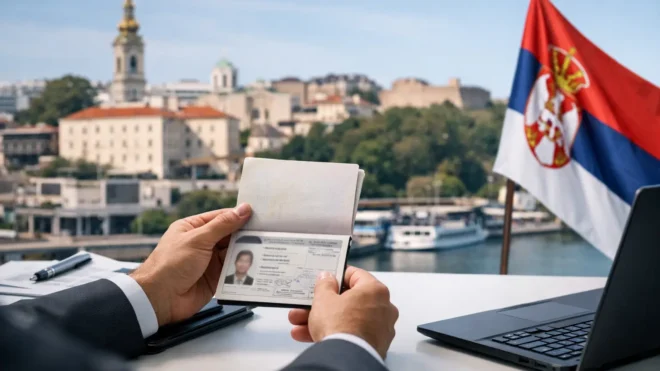
If you plan to live in Serbia while running a business, the resident permit through company formation Serbia route is often one of the most practical options. It can work well for founders, directors, entrepreneurs, and foreign nationals who want a legal basis to stay in the country while actively managing local operations. But it is not a shortcut. Serbian authorities expect the company to be properly formed, the role to be real, and the documentation to be consistent from immigration to banking to tax registration.
For many foreigners, that is where the process becomes difficult. The company registration may look straightforward on paper, but residence approval depends on more than just having a legal entity. Your business activity, your position in the company, your address registration, your financial documentation, and the way your application is prepared all matter.
How the resident permit through company formation Serbia route works
In simple terms, a foreign national may apply for temporary residence in Serbia based on employment or business engagement through a Serbian company. That company might be a newly established LLC, an existing Serbian company, or in some cases a sole proprietorship structure, depending on the applicant’s role and overall setup. The key point is that your stay in Serbia must have a lawful and documented purpose tied to your business activity.
If you are the founder of a Serbian company, being an owner alone is not always enough. In many cases, authorities look more closely at your operational role. Are you appointed as a director? Are you employed by the company? Is there a credible business reason for your presence in Serbia? Those questions shape the application.
This is why the company and immigration steps should be planned together, not handled as separate tasks. A mismatch between corporate documents and residence filings can slow the process or create avoidable objections.
Who usually applies this way
This option tends to suit a specific profile of applicant. It is commonly used by foreign entrepreneurs opening a Serbian company, investors who need a local presence, consultants relocating their operations, and international professionals who want to work through their own entity in Serbia.
It can also make sense for business owners who already have clients or partners in Serbia and want a compliant long-term structure. For some applicants, this route is more practical than relying on short stays, border runs, or informal arrangements that create tax and immigration risk.
That said, it is not the right solution for everyone. If your company is inactive, underprepared, or created only to support a residence application without real business substance, that can raise problems. Serbia is business-friendly, but it still expects legal and procedural consistency.
What authorities usually expect to see
A successful application is built on evidence, not assumptions. While exact requirements can vary by nationality, municipality, and case details, authorities typically expect a clean corporate and personal file.
Company documents
The company should be fully registered and operational on paper. That usually means incorporation documents, proof of ownership structure, director appointment documents if relevant, and tax registration details. Depending on the case, authorities may also want to see evidence of business purpose, contracts, invoices, office arrangements, or other proof that the company is active or preparing to operate.
Personal and immigration documents
The applicant generally needs a valid passport, proof of legal entry or stay where applicable, white card or address registration, health insurance, and proof of sufficient financial means. You may also need passport photos, application forms, and supporting statements that explain your role in the company.
Employment or role-based evidence
If the residence basis is tied to employment, then the employment agreement and labor-related documentation become important. If the basis is your executive or founder role, the legal structure must support that position clearly. Ambiguity here is one of the most common reasons cases become complicated.
The difference between owning a company and qualifying for residence
This is one of the most misunderstood parts of the process. Registering a company in Serbia does not automatically grant temporary residence. The company creates a legal platform, but residence approval depends on whether your application shows a valid and documented reason for living in Serbia through that platform.
For example, someone may own 100 percent of a Serbian LLC but still need the right internal company documents and immigration basis to support a residence application. Another applicant may be both founder and director, which can create a stronger factual connection to the company if documented correctly. In some cases, a work permit may also be part of the wider compliance picture, depending on the applicant’s role and nationality.
This is why strategy matters. The legal structure should fit your real business activity, not just the form that seemed fastest at the incorporation stage.
Timelines and practical sequencing
The timing is rarely just about one application. A resident permit through company formation Serbia usually involves a sequence of related steps, and delays in one area can affect the next.
First, the company must be established correctly. Then tax, banking, and operational setup often follow. Address registration has to be handled properly. After that, the residence application can be submitted with a file that reflects the actual business setup. In some cases, applicants also need a visa strategy before arrival or before filing, depending on their nationality and travel status.
Processing times vary. Some cases move efficiently when documents are complete and aligned. Others slow down due to missing translations, inconsistent company data, unclear business purpose, or confusion about the applicant’s role. The practical lesson is simple: speed comes from preparation, not from rushing.
Common issues foreign applicants run into
The biggest mistakes are usually procedural, not legal. Applicants often assume that once the company exists, the rest will be routine. In reality, small errors can affect the whole file.
One common issue is using a company structure that does not align with the applicant’s actual work model. Another is weak documentation around the Serbian address, whether residential or business-related. Banking can also create delays if the company account process is not coordinated early enough. Then there is the translation and legalization problem – documents issued abroad may need formal treatment before they can support a Serbian filing.
There is also a compliance issue many applicants notice too late: immigration, tax, and corporate records should tell the same story. If your company documents say one thing, your residence application says another, and your banking records suggest something else, the file becomes harder to defend.
When this route makes the most sense
This path is usually strongest when you genuinely plan to build or operate through a Serbian company. If you need a local business vehicle, intend to live in Serbia for ongoing management, and want a legal framework that covers both operations and residence, it can be a very efficient route.
It is less suitable when the company has no real activity or when the applicant would be better served by another residence basis. For example, some people are more appropriately structured through employment by an existing company, family reunification, or another immigration category. The right answer depends on your nationality, business model, timeline, and long-term plans.
Why coordinated support matters
Foreign nationals are often surprised by how interconnected the process is. Company registration, residence permits, work authorization, bookkeeping, address registration, and bank account opening are not separate administrative chores. They affect one another.
That is why many applicants prefer one provider, like Start Serbia, that can coordinate legal, tax, and operational steps together. A service-led approach reduces the risk of filing a company one way, opening a bank account another way, and then discovering that your residence application needs a different structure altogether. For foreigners entering Serbia for the first time, that coordination saves time and avoids expensive rework.
A practical partner can also help assess whether this route is actually the right one before any documents are filed. That early judgment matters. The best outcome is not just getting approved once – it is building a setup you can maintain lawfully after approval.
If you plan to live and work in Serbia through your own business, treat residence as part of the business setup from day one. That approach usually leads to fewer delays, cleaner compliance, and a more stable start once you are on the ground.
Hi,
I am Prashant from Mumbai, India and i am interested in business registration and residence permit in Serbia.
I am seriously interested in registering a business to actually operate the business from Serbia along with my wife.
By the way I am 66 years old with 39 years of international experience in European, Middle Eastern, USA companies in Fashion Clothing / Textiles and my wife has similar experience too. This is basically to let you know that I can use my experience to start and operate a new business in Serbia.
Can you please let me know the requirements, costs breakdown like government fees plus your fees etc, timeliness, process in general for me to understand what I should expect before proceeding.
My email winrao1@gmail.com what’s app number +919967406932.
Looking forward to hearing from you soon,
Thanks & Regards,
Prashant Rao
Hi Prashant. Please check your inbox to see the Offer.