While the European Union is Serbia’s primary trade target, a powerful regional agreement is quietly fueling economic growth and preparing Serbian businesses for the competitive European market: the Central European Free Trade Agreement (CEFTA).
For any company doing business in Serbia, understanding CEFTA is key to unlocking a vibrant, 24-million-consumer market right on your doorstep.
What is CEFTA? A Launchpad for the EU
Originally formed in the 1990s for Central European nations, CEFTA has evolved. As its initial members graduated to full EU membership, the agreement was reshaped in 2006 to include the next generation of EU candidates from Southeast Europe.
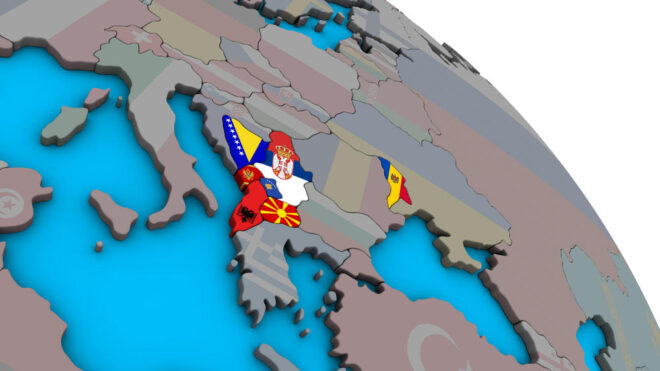
Today’s CEFTA members include:
- Albania
- Bosnia and Herzegovina
- Montenegro
- North Macedonia
- Moldova
- Serbia
- Kosovo*
Think of CEFTA as a crucial training ground. By creating a free trade zone among these nations—removing customs barriers and simplifying trade—it directly prepares their economies for the rigors and competition of the single European market.
Why CEFTA is a Game-Changer for Serbia
For Serbia, CEFTA is more than a treaty; it’s a strategic advantage.
- Access to a Vital Market: With a total exchange of almost €7.5 billion in 2024, the CEFTA region is Serbia’s second-most-important market after the EU.
- A Competitive Powerhouse: Serbia isn’t just participating; it’s leading. As the region’s strongest economy, Serbia runs a significant trade surplus, with exports covering imports by over 200%.
- A Nursery for SMEs: CEFTA is particularly vital for small and medium-sized enterprises (SMEs) that may not yet be ready to compete in the vast EU market. It provides a protected regional environment to grow, scale, and build confidence.
Navigating the Current Challenge
It’s important to address the current situation transparently. Since 2021, the political decision by Kosovo* to block goods from Serbia has meant that the CEFTA agreement is not fully functional between these two parties. While this is a significant disruption, it has not diminished the agreement’s immense value for trade between all other member states.
The Four Pillars of CEFTA’s Future
CEFTA is continuously evolving to deepen integration. Its current main priorities are:
- Liberalization of Services: Opening up cross-border trade in services.
- Equal Investment Conditions: Creating a level playing field for mutual investments.
- Public Procurement Access: Allowing companies from member states to compete for government contracts across the region.
- Enhanced Competitiveness: Harmonizing trade rules to make the entire region more competitive.
A key benefit for manufacturers is “cumulation of origin,” which allows materials from several CEFTA countries to be used in a product without losing its “local” status. This encourages cross-border supply chains and makes regional production more efficient.
Conclusion: Your Strategic Advantage Starts with CEFTA
For companies operating from Serbia, CEFTA offers a powerful dual benefit:
- Immediate Market Access: You gain barrier-free access to a consolidated market of 24 million people in Albania, Bosnia and Herzegovina, Montenegro, North Macedonia, and Moldova.
- A Proven Testing Ground: It serves as the perfect “dress rehearsal” for the EU, allowing Serbian companies to hone their competitiveness, build resilient supply chains, and scale their operations in a familiar environment.
By establishing a presence in Serbia, your business doesn’t just get a gateway to the EU—it gets a commanding position in the thriving, integrated market of Southeast Europe.
(Kosovo – This designation is without prejudice to status and is in line with UNSC Resolution 1244 and the ICJ Opinion on the Kosovo declaration of independence.)*