
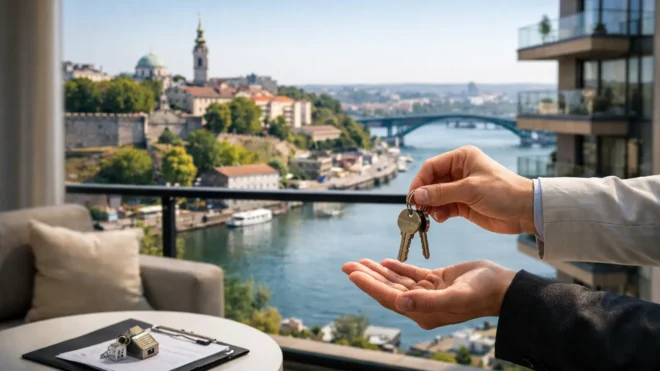
Landing in Belgrade or Novi Sad with two suitcases and a deadline is rarely the right moment to learn how apartment rental in Serbia for expats actually works. Most foreign tenants are balancing visa steps, work plans, banking, and short-term housing at the same time. That is exactly why the rental process needs to be approached as a legal and practical decision, not just a property search.
Serbia can be a very workable market for foreign residents, but it is not always intuitive. Listings move quickly, lease terms vary, and what looks simple in an ad may become more complicated once documents, registration, utility payments, and landlord expectations enter the picture. If you want a stable setup from the start, it helps to know where the real risks are.
How apartment rental in Serbia for expats usually works
In most cases, expats begin with furnished apartments, especially during their first six to twelve months in the country. This is common in Belgrade, Novi Sad, and other larger cities where foreign professionals, founders, and remote workers tend to settle. Furnished units reduce friction, but they also come with trade-offs. The monthly rent is usually higher, and inventory quality varies more than many tenants expect.
The standard structure is straightforward on paper. A landlord offers the apartment, the tenant pays rent monthly, and a deposit is usually required. In practice, several details matter: whether the lease is signed properly, whether the landlord is comfortable renting to a foreign national, whether address registration is possible, and whether utility obligations are clearly defined from day one.
This is where many expats lose time. They find a good apartment, agree on the price, and only later discover that the landlord does not want to provide the paperwork needed for residence-related procedures or official registration. For a tourist stay, that may be manageable. For anyone building legal residence and business activity in Serbia, it is a serious issue.
What rent looks like in Serbia
Rental prices depend heavily on city, neighborhood, building condition, and whether the apartment is aimed at local tenants or the international market. Belgrade remains the most expensive option, particularly in central municipalities and newer developments. Novi Sad is often more moderate, although prime areas and modern buildings can still command strong prices. Smaller cities may offer substantially lower rents, but the trade-off is usually fewer premium units and less flexibility for foreigners seeking English-speaking landlords or professionally managed properties.
Price alone should not decide the search. A cheaper apartment can become expensive if utilities are poorly controlled, if heating costs spike in winter, or if the unit is not suitable for official registration. In Serbia, utility structures are not always as predictable as foreign tenants expect, especially in older buildings. Central heating, building maintenance, internet setup, and electricity usage should all be clarified before signing.
If you are relocating for business or long-term residence, it is usually better to assess the total monthly cost rather than focus only on advertised rent. The right apartment is the one that supports your legal stay, your work routine, and your daily logistics without creating avoidable administrative problems.
Choosing the right city and neighborhood
Belgrade attracts the largest share of expats for obvious reasons. It offers stronger business infrastructure, broader international networks, more premium housing stock, and easier access to legal, financial, and relocation services. Within the city, neighborhood choice depends on your priorities. Central areas may support lifestyle and convenience, while newer residential zones may provide better parking, building quality, and predictable utilities.
Novi Sad is often attractive for expats who want a more compact city, lower stress, and a strong professional environment without Belgrade pricing. It works particularly well for remote professionals, smaller teams, and foreign residents who value walkability and a calmer pace.
For some clients, especially investors or business owners setting up operations outside the capital, other Serbian cities can also make sense. But the rental market becomes less standardized. That does not mean it is worse. It means that local knowledge matters more, and expectations should be adjusted.
Lease terms that need special attention
A rental agreement in Serbia should do more than confirm rent and duration. For foreign tenants, the lease needs to support compliance. That includes accurate identification of the landlord, the property address, payment obligations, deposit terms, and any conditions tied to registration or early termination.
One of the most common mistakes is treating the lease as a formality. It is not. If the contract is incomplete, inconsistent, or drafted without attention to your immigration or residency needs, it may create unnecessary friction later. This is especially relevant if you need proof of address, support for temporary residence procedures, or a clear record of lawful occupancy.
The deposit is usually equivalent to one month of rent, though this can vary. Make sure the agreement states when and how the deposit can be retained, what counts as normal wear and tear, and what the move-out process looks like. Without that clarity, even a smooth tenancy can end in a preventable dispute.
Apartment rental in Serbia for expats and residence registration
This is the point that deserves the most attention. Not every landlord is prepared to support a foreign tenant’s residence-related paperwork, even if they initially say yes. Some prefer informal arrangements. Others are simply unfamiliar with what a foreign national needs. That gap between expectation and reality can delay applications and create avoidable stress.
If you plan to apply for temporary residence, a visa-related procedure, or any official process tied to your Serbian address, confirm the landlord’s cooperation before any money changes hands. Ask whether they are willing to sign the necessary documents, whether the property can be used for registration, and whether the lease format matches the administrative purpose.
This is one reason many foreign nationals prefer working with a coordinated local team rather than negotiating everything alone. At Start Serbia, real estate support is often most valuable not because it finds an apartment faster, but because it aligns the property choice with immigration and administrative requirements from the beginning.
Common issues expats run into
The Serbian rental market is workable, but it is not friction-free. Some listings are outdated. Some advertised prices shift once a landlord hears that the tenant is foreign. Some apartments look renovated in photos but perform poorly in winter. And some landlords want rent in cash while the tenant needs payment records for compliance or internal accounting.
Language can also become a practical barrier. Even when both sides are acting in good faith, misunderstandings happen around notice periods, utility bills, repairs, and who is responsible for building fees. These are not dramatic problems, but they can become expensive if ignored.
Another issue is timing. Expats often try to secure a long-term apartment before they fully understand where they actually need to live. That can work, but it can also lock them into the wrong neighborhood, a poor commute, or a lease that does not fit their permit timeline. In many cases, a short initial stay followed by a properly structured long-term rental is the more stable path.
What to prepare before you start searching
You do not need an overly complex file to rent an apartment in Serbia, but preparation helps. Landlords and agents usually respond better when the tenant can present a clear profile, expected move-in date, intended lease duration, and payment plan. If you already know whether you need address registration or residence support, say so early.
It also helps to define your non-negotiables before viewing properties. If you need a home office, elevator access, parking, pet approval, or a landlord willing to issue proper documentation, that should shape the shortlist from the start. Otherwise, you waste time on apartments that were never viable.
Foreign clients coming to Serbia for company formation, work permits, or residence applications are often better served by treating housing as part of a broader relocation process. The apartment should fit the legal setup, not compete with it.
A practical way to avoid costly mistakes
The safest rental process is usually not the fastest one. It is the one where the lease, the landlord, the property, and your legal needs all line up before commitment. That may mean reviewing the contract more carefully, confirming registration support in writing, or rejecting a seemingly attractive apartment that creates compliance risk.
For expats, the best apartment is rarely just the nicest one within budget. It is the one that lets you live and operate in Serbia without administrative gaps, unclear obligations, or last-minute surprises. A good rental should make your relocation easier, not add another layer of bureaucracy.
If you are moving to Serbia for work, business, or long-term residence, take the extra step of making sure your housing decision supports the bigger plan. That time pays for itself very quickly once your address, paperwork, and daily life start working together instead of against each other.